

British delegation to Bosnia and Herzegovina learn of the struggles still facing a healing nation
From 29th March until 2nd April 2026 a delegation of British parliamentarians, led by me Fabian Hamilton MP (Labour), including Anna Dixon MP (Labour), John Slinger MP (Labour), Martin Vickers MP (Conservative), Baroness Blackstone (Labour) and Lord Cromwell (Crossbench). We were accompanied by Henry Collison, from the BGIPU Secretariat. The delegation met at London Stansted airport on the afternoon of Sunday 29th March, during the Easter Recess and flew to Sarajevo, a flight of just over two hours. The transfer to the hotel in the centre of town was quick and efficient.
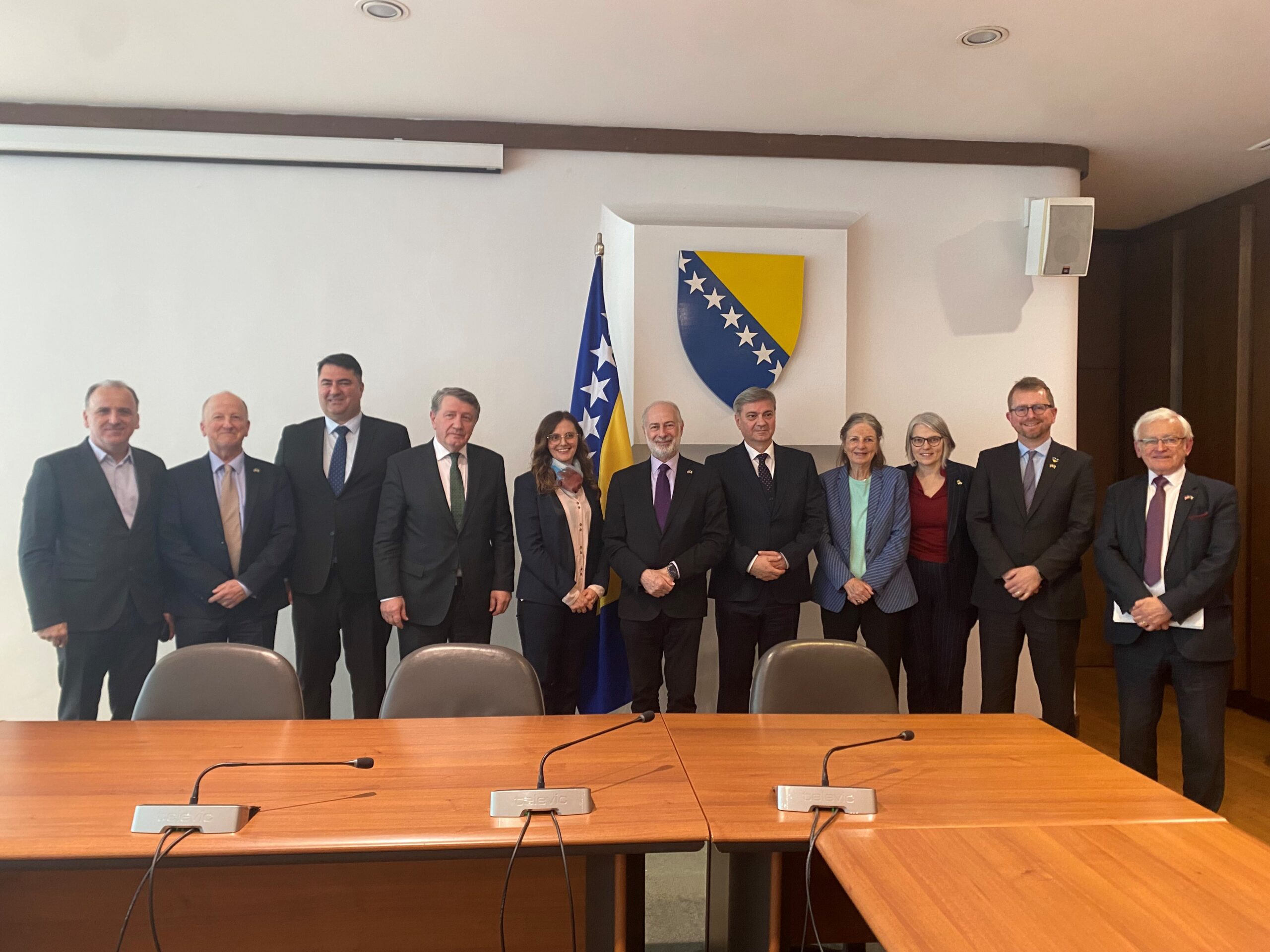
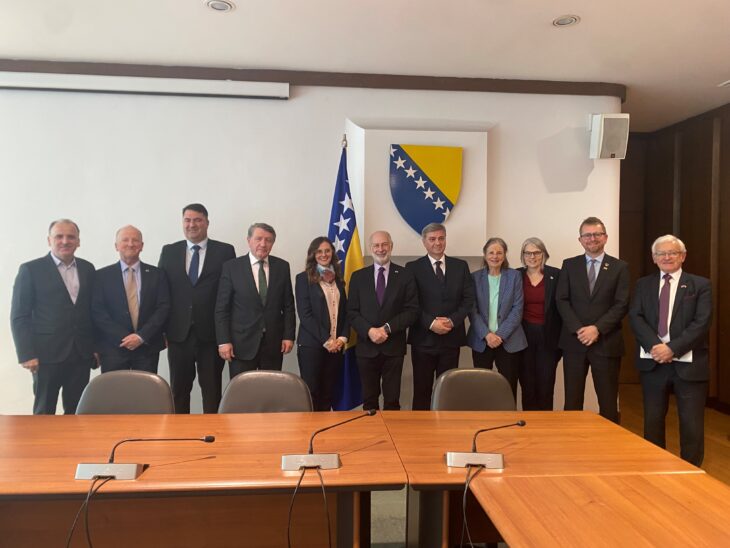
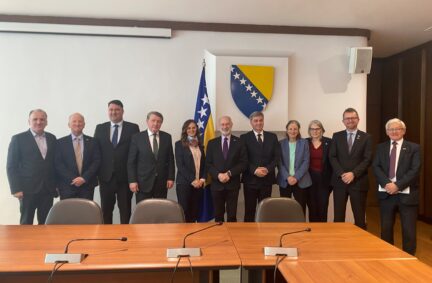
On Monday morning we travelled to the nearby British Embassy where we met Ambassador Julian Reilly and his staff for a briefing on our visit programme. After an informative and helpful meeting with our UK diplomats, we first met with members of the Parliament of the Federation of Bosnia and Herzegovina, one of the two political entities within the country. This was followed by meetings with representatives of the Joint Collegium of the Parliamentary Assembly of Bosnia and Herzegovina and then a meeting with the PA’s IPU delegation. A late lunch was held at Libertas, hosted by the Collegium. Our first day was a good introduction to the complex state that is Bosnia and Herzegovina.
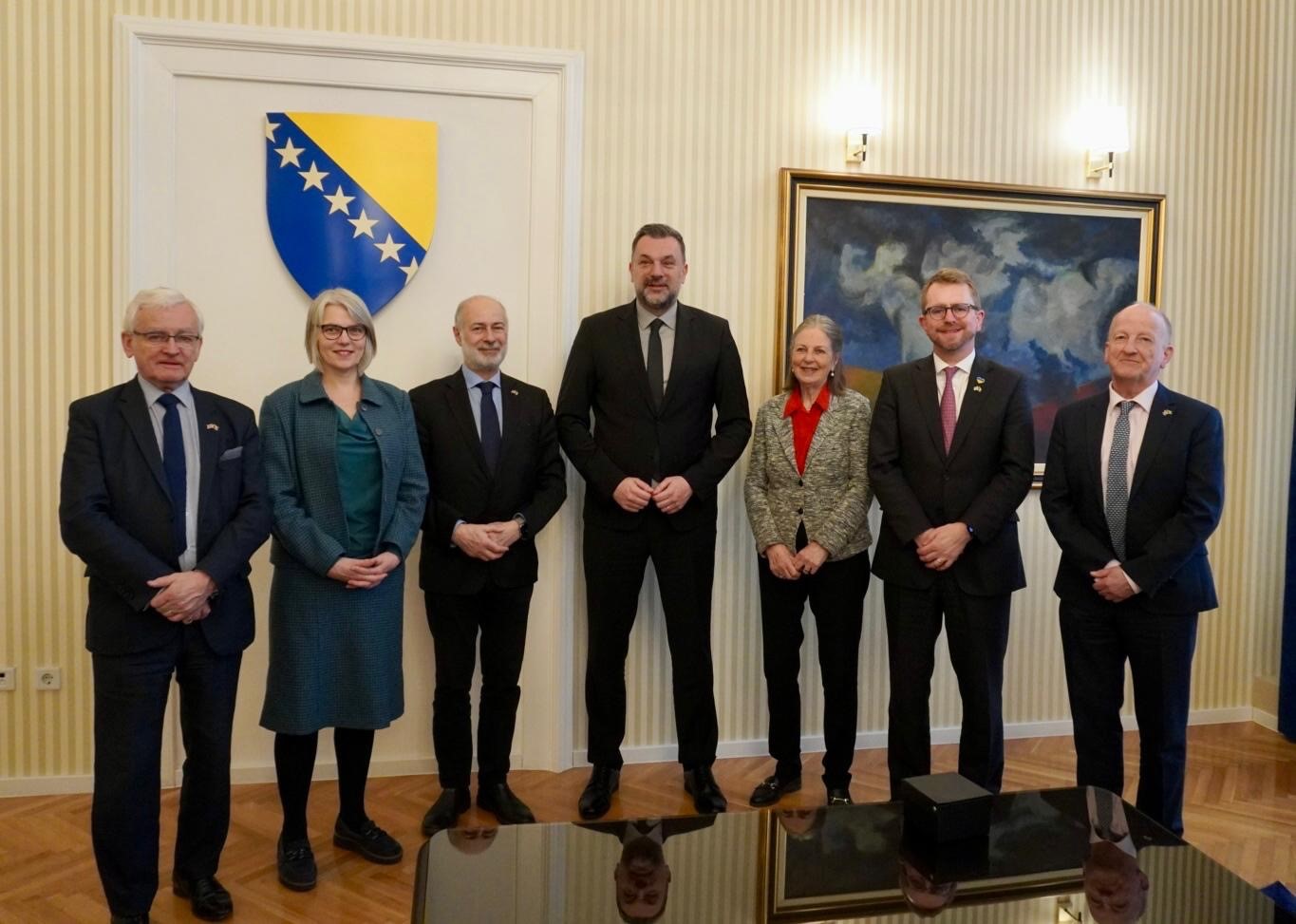
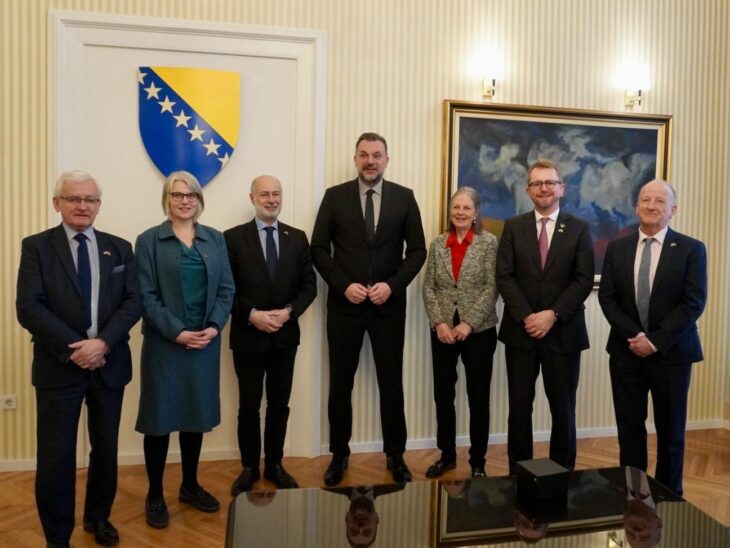
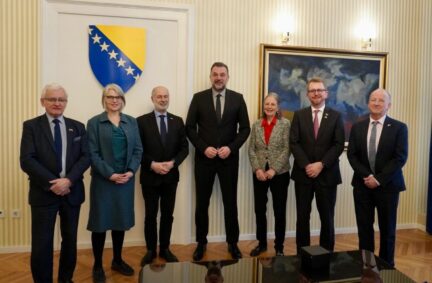
Our first meeting of the day on Tuesday 31st March was with the Minister of Foreign Affairs of Bosnia and Herzegovina, Elmedin Konaković, who spoke excellent English and gave us a helpful introduction to the current political situation in the country as well as a detailed explanation of where Bosnia and Herzegovina stood internationally on the pressing issues of the day.
From the Foreign Ministry we went to the Presidency where we had hoped to meet with at least one of the Presidential Triumvirate. Bosniak member of the Presidency Denis Bećirović and Croat member of the Presidency Željko Komšić had both visited the UK within the past few months but unfortunately neither they, nor Serb member of the Presidency Željka Cvijanović were available so we met the three senior advisors of each member of the Presidency, but all were proficient in English so we learned a great deal about the cumbersome but effective system that forms the Head of State role in Bosnia and Herzegovina.
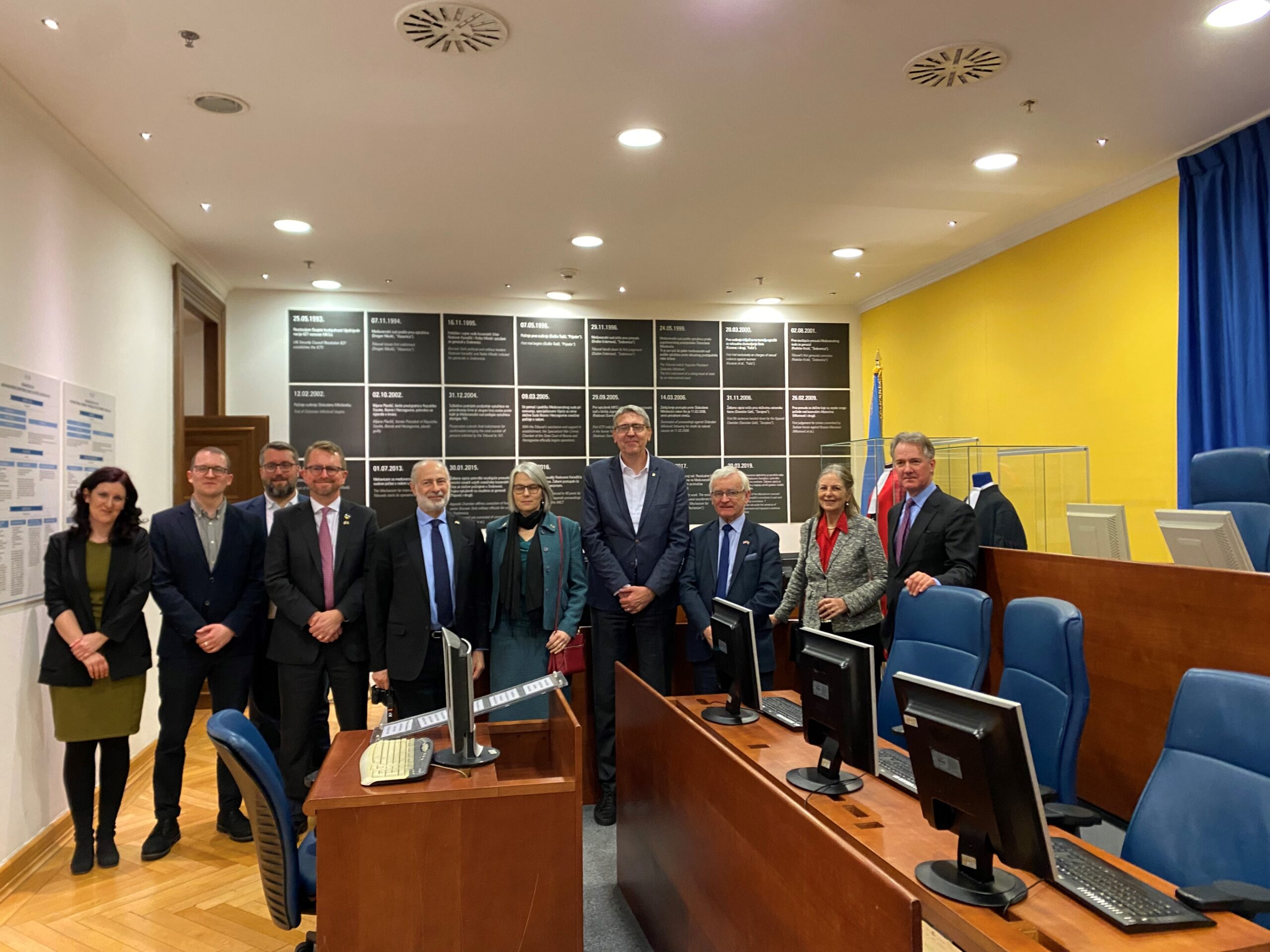
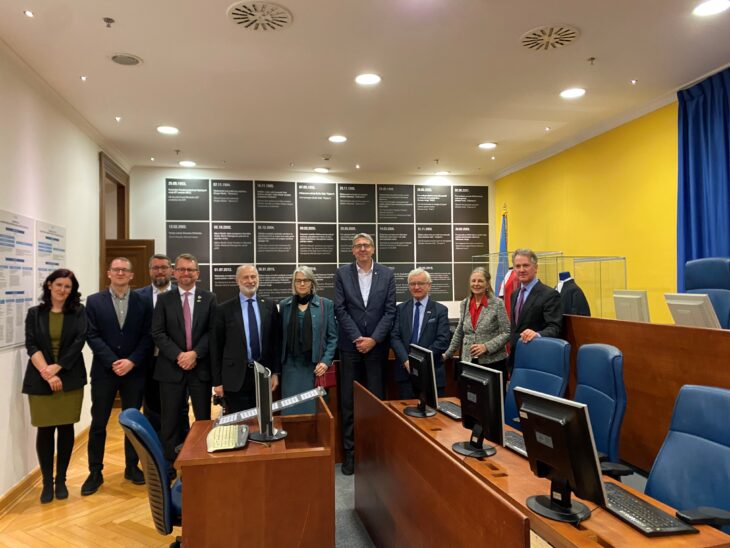
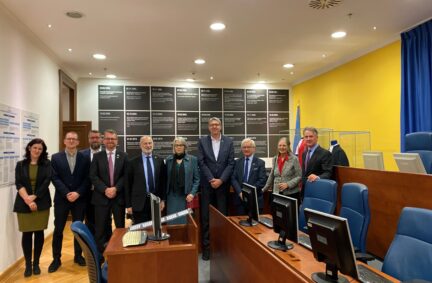
After lunch on Tuesday we were invited to a cultural event at the City Hall to commemorate the thirtieth anniversary of the end of the war which was, hosted by the Mayor of Sarajevo, former basketball star Samir Avdić. The event was well attended by families from the city of all backgrounds and we heard moving testimonies, music and poetry remembering the appalling civil war and the losses suffered by all sides of the conflict. After the cultural events concluded, we were given a guided tour of the restored Ottoman-style building and a talk about the International Criminal Tribunal for the Former Yugoslavia (ICTY) set up by the United Nations in The Hague in 1993 which indicted and tried 161 individuals accused of war crimes during the terrible conflict. A reconstruction of the courtroom was set up in Sarajevo City Hall including some of the original furniture and equipment from the trials in the Netherlands. It was deeply moving and reminded us why Europe, the United Nations and the world must work harder to prevent future such wars.
We set off early by road on Wednesday April 1st for Banja Luka, the administrative centre of Republika Srpska, a journey of three and a half hours along fairly good quality roads and stunning, though very wet countryside. Lunch on arrival was followed by a long meeting with Parliamentarians in Banja Luka who talked at length through interpreters about how the Serb population of Bosnia and Herzegovina had been victimised by the international community and marginalised by the other ethnicities that make up the nation. It was difficult at times to see how the country stays together, but thankfully in spite of the obviously clear divisions, the Dayton Accords still work and the nation largely functions as a whole.
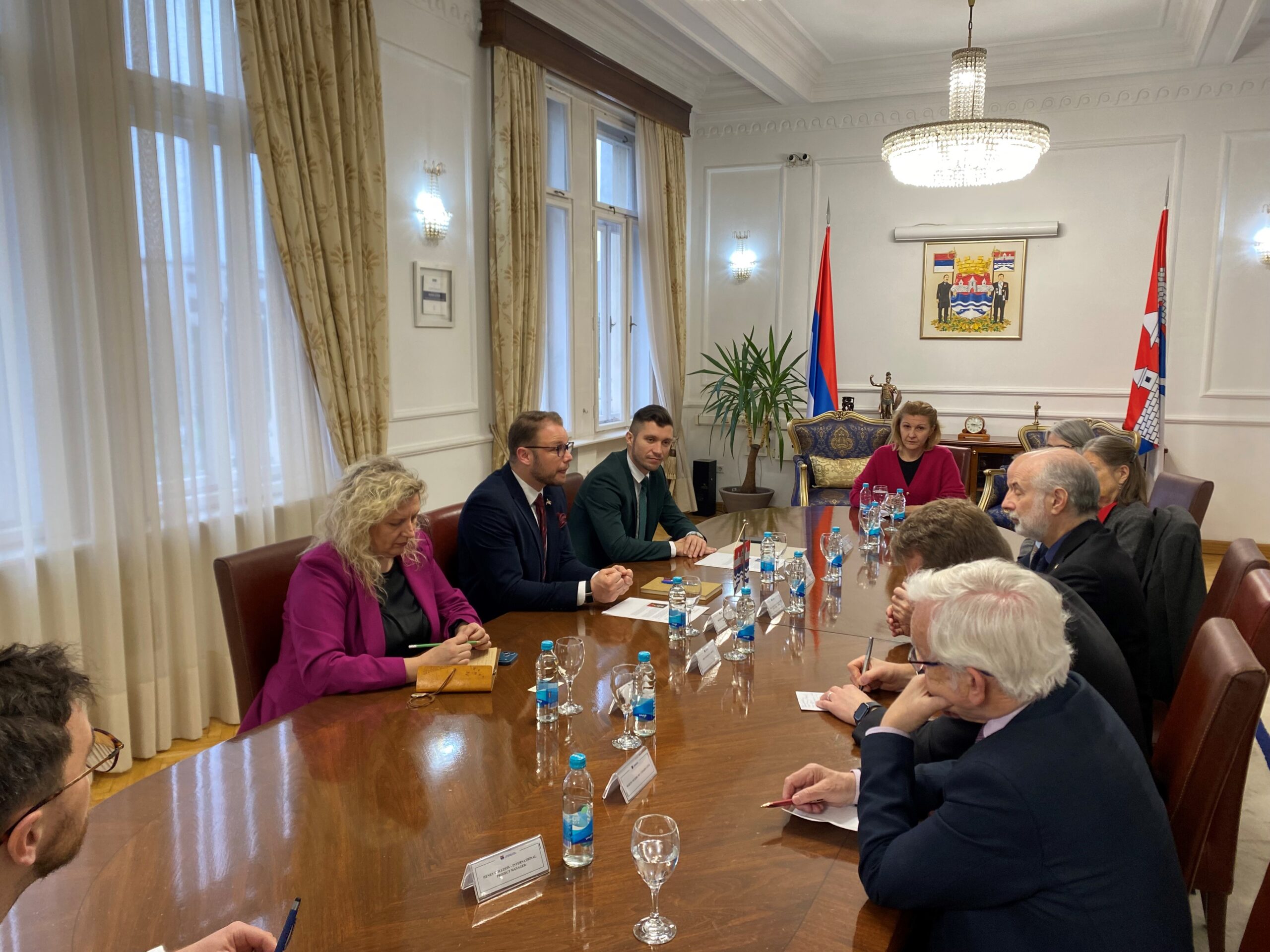
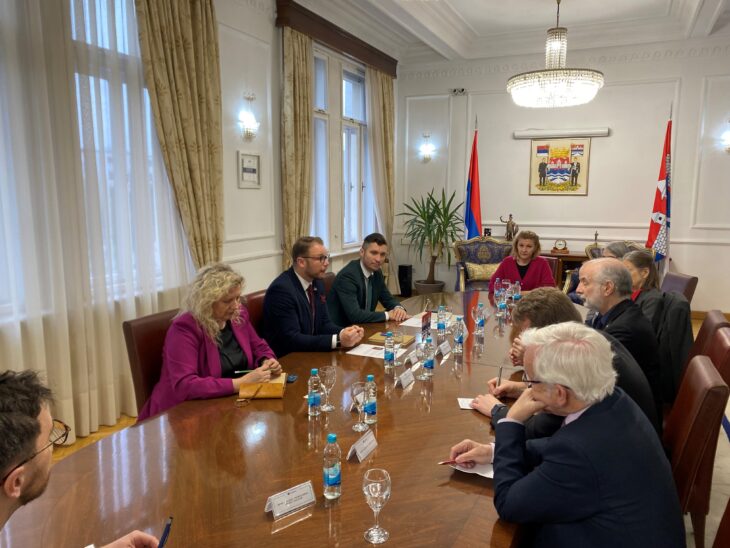
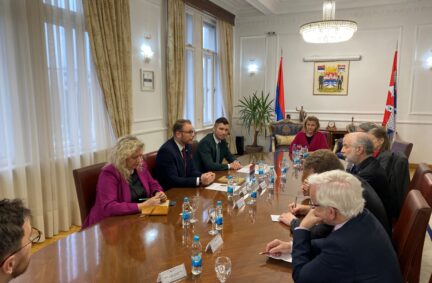
Our last and highly significant meeting took place on the last day, Wednesday 2nd April, with Draško Stanivuković, the 33 year old Mayor of Banja Luka and a refreshing, likeable, self-confident leader whose self-proclaimed mission is to clean up the politics of Republic Srpska and help bring Bosnia and Herzegovina into the EU as a modern European state. The British Embassy had organised for the Mayor to meet the Mayor of Manchester and the Mayor of the West Midlands a few weeks earlier and Mayor Stanivuković had clearly gained a lot from his visit to the UK. We were all impressed with his honest outgoing personality and the promised changes he is committed to making.
Finally, after the long drive back to Sarajevo, we visited the Tunnel of Hope, a museum now of the famous tunnel which was dug painstakingly by hand under the city’s airport to relieve the siege of Sarajevo in 1993. It was a timely reminder, thirty years after the siege ended, of what a civil war does to human society.
This was a short but highly interesting and educational delegation visit which made all of us even more determined to ensure that Bosnia and Herzegovina stays together as a nation state and the important role that the IPU has in assisting fractured societies and countries to hold onto democratic values, freedom and the rule of law. The delegation itself worked very well with all of us fully playing our part.
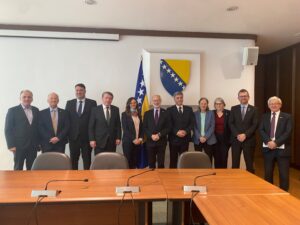
Delegation pictured with members of the Parliamentary Assembly of Bosnia and Herzegovina
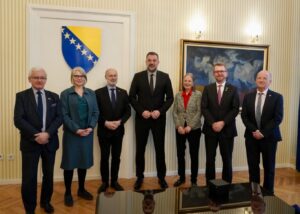
Delegation with the Foreign Minister of Bosnia and Herzegovina, Elmedin Konaković
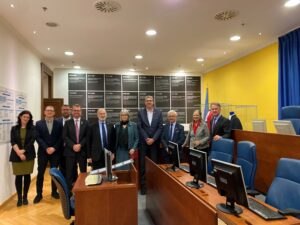
In Sarajevo City Hall with Mayor of Sarajevo, Samir Avdić
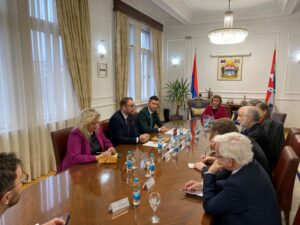
Meeting with Mayor of Banja Luka, Draško Stanivuković