

British delegation to Colombia engages on peacebuilding efforts and continued cooperation
From Monday 17 to Friday 21 November, I led a cross-party group of parliamentarians on a visit to Bogotá, Colombia. The delegation included Baroness Alexander, Baroness Prashar, Leigh Ingham MP, Caroline Dinenage MP and Stephen Gethins MP. They were accompanied by Dominique Rees and Henry Collison from the BGIPU. The visit offered a concentrated and often moving insight into a country shaped by conflict, resilience, and a determination to build a more peaceful future.
Although Monday was an official bank holiday in Colombia, we were welcomed by the British Ambassador, George Hodgson, who met with us to discuss the work of the British Embassy and a range of current national issues. It was an invaluable introduction, setting the context for the week ahead and underlining the depth of the UK’s engagement with Colombia at a diplomatic and multilateral level.
On Tuesday morning, we attended a comprehensive briefing with embassy staff at the Ambassador’s residence. The discussions spanned politics and the economy, defence and security, and issues of particular significance to Colombia, including drug production and trafficking, biodiversity, and climate change. The scale and complexity of the challenges facing the country were clear, but so too was the expertise and commitment of those working to address them.
Our first external meeting took place at the Edificio Avianca, the former headquarters of the national airline in downtown Bogotá, where we met with human rights defenders. We listened to powerful and often painful testimonies from individuals who have lived through decades of internal conflict, and who continue to face threats for their work as social leaders, activists, and defenders of human rights. These conversations brought into sharp focus the human cost of Colombia’s long conflict and the courage of those who continue to advocate for justice and peace.
The UK remains the penholder at the United Nations on the Colombian Peace Agreement. While the agreement has brought about remarkable change and progress for large parts of the country, it has not delivered complete peace or security. That reality was never far from our discussions. We were reminded that peace is not a single moment, but an ongoing and fragile process, requiring sustained political will and international support.
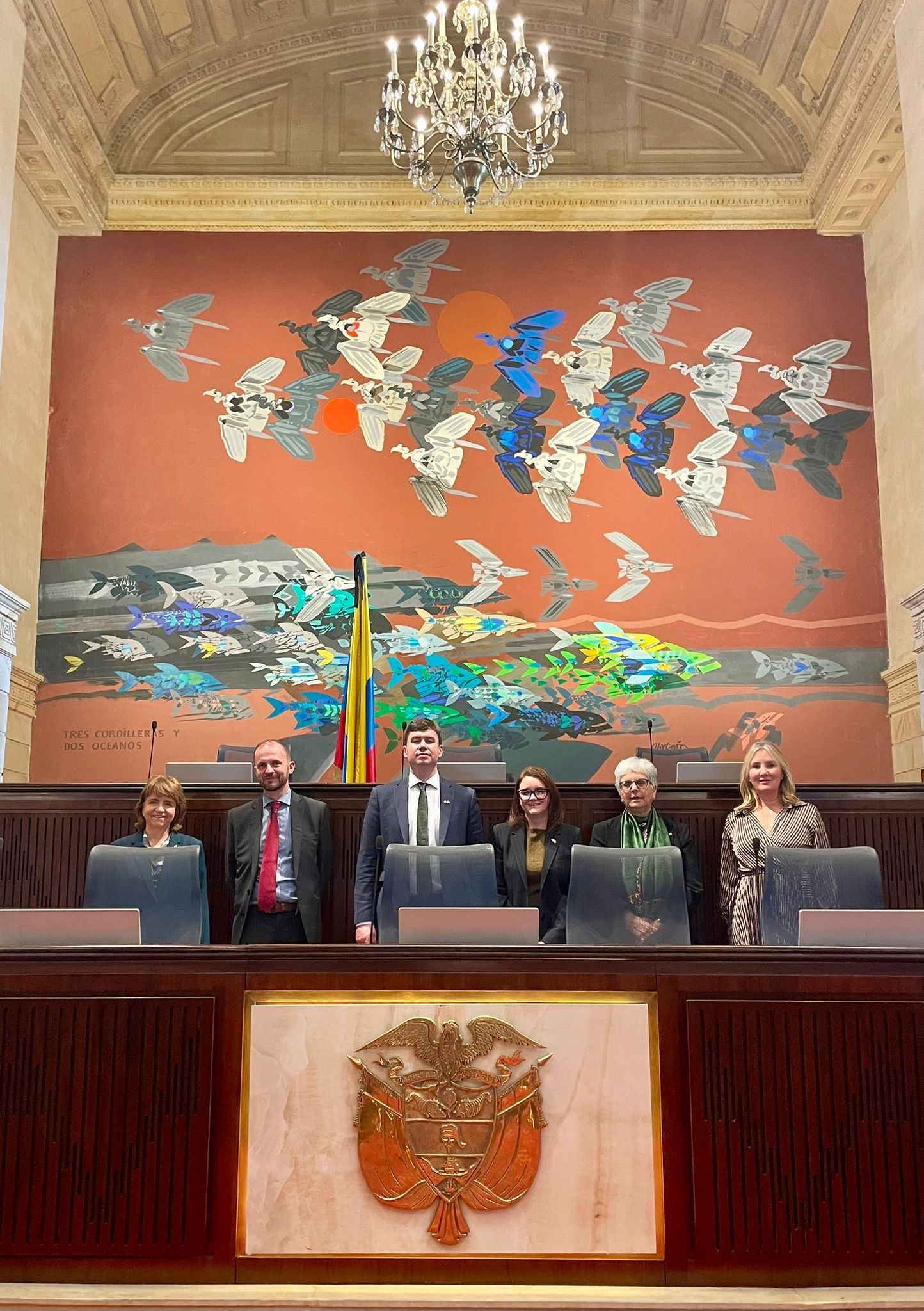
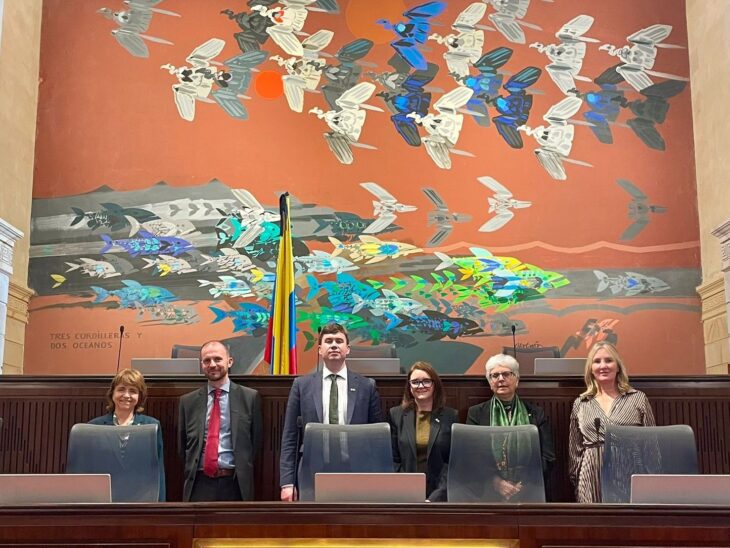
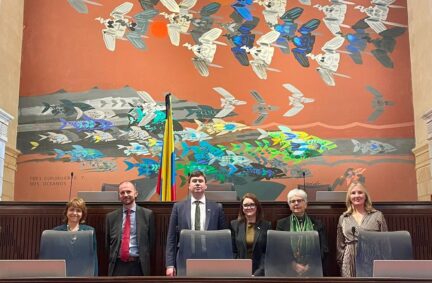
We were given a tour of Congress and the Senate in the Capitolio Nacional, followed by lunch with members of the Colombia–UK parliamentary friendship group. The visit was overshadowed by the recent assassination of Senator Miguel Uribe Turbay in August. A member of the friendship group and a presidential hopeful, his death in Bogotá served as a stark reminder of the persistent security challenges faced by the country, even at the highest levels of public life.
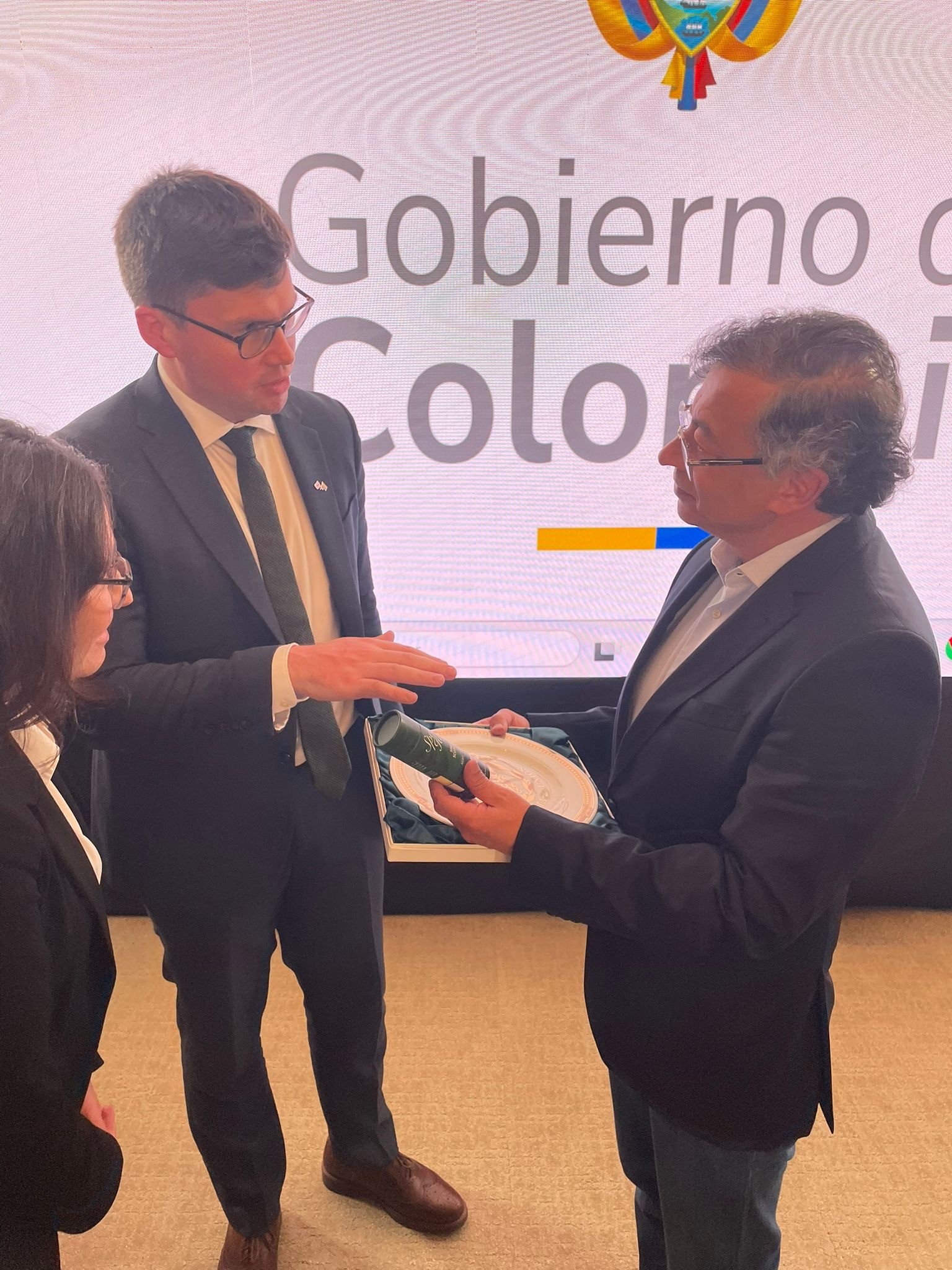
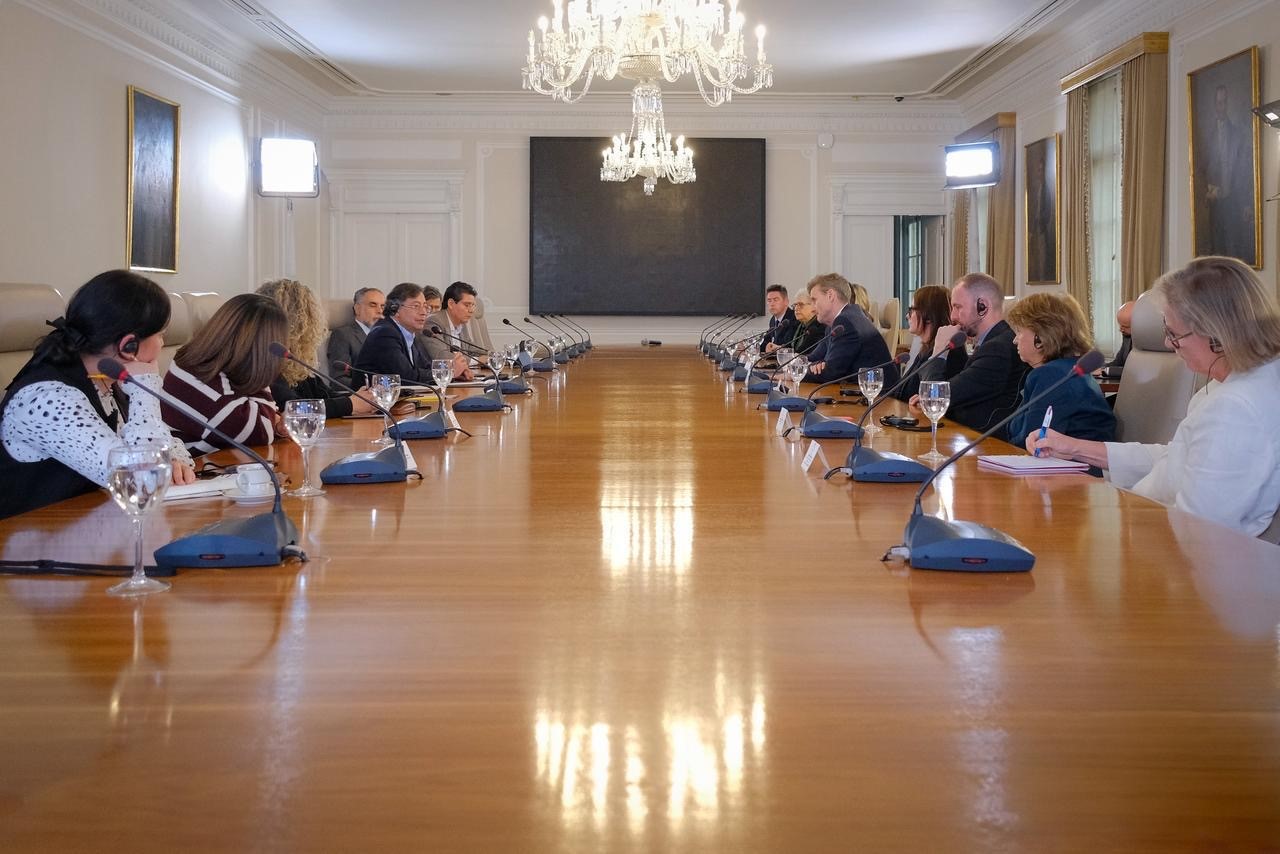
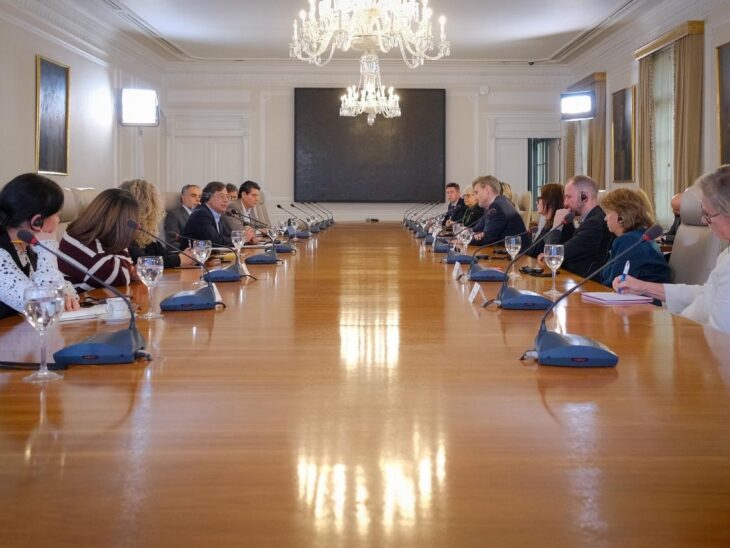
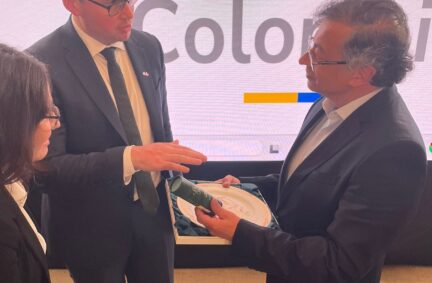
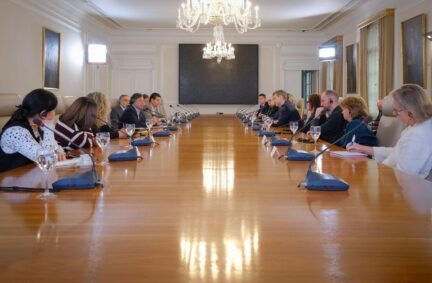
Later that afternoon, we walked down from the Capitolio to the presidential palace to meet President Gustavo Petro. The palace stands facing the grand colonial and neoclassical buildings of Congress, symbolising the close and often tense relationship between executive and legislature. Inside the cabinet room, behind the President’s chair, hung a striking painting gifted to him by the artist Jaime Rojas: a Palestinian child with bright, beaming eyes, set against the devastation of war. The inscription dedicated the work to the people of Gaza and described President Petro as a humanist and defender of the Palestinian cause. A powerful image, revealing something of the President’s worldview before a word was spoken.
Our meeting with President Petro lasted two hours. As Colombia’s first left-wing president, he is now entering the final months of his single four-year term, as mandated by the constitution. The discussion was wide-ranging and candid, reflecting both the ambition of his agenda and the constraints under which he governs.
Following the meeting with President Petro a smaller group travelled to Valledupar in the North east of Colombia, along with a number of colleagues from the British Embassy. We arrived late on the Tuesday evening and our meetings took place across Wednesday 19 November.
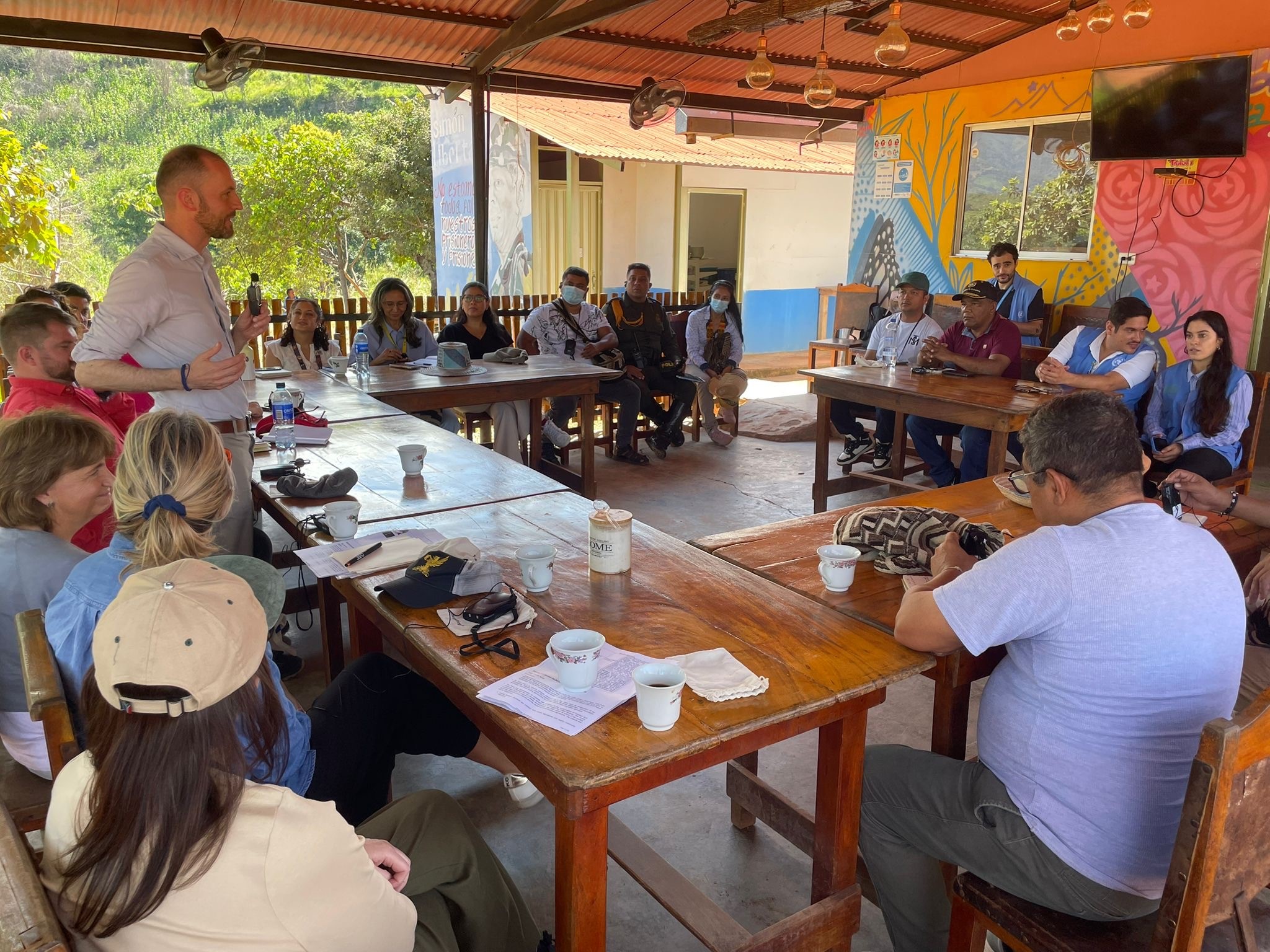
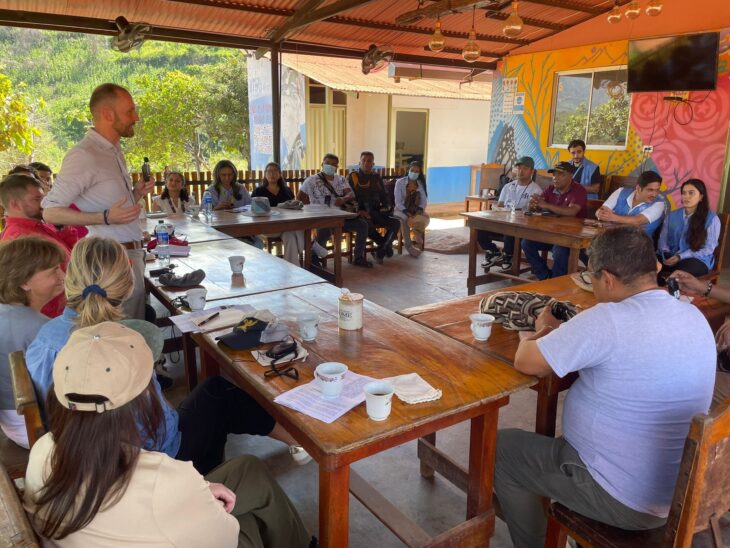
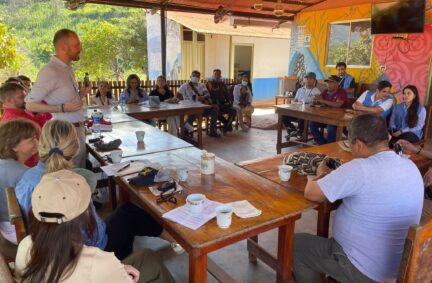
The first meeting was with UN Verification Mission who gave an overview about the peace process and their activities locally. They then took us to meet with ex-combatants in San Jose de Oriente, outside of Valledupar. There we saw the peace process in action and where signatories to the peace process have been able to build new lives with their families. This was an important meeting to gain first-hand experience of those affected by the conflict and how they were rebuilding their lives. We were all able to see some of the local projects such as the school and other projects in what was a powerful visit.
On our return to Valledupar we met with indigenous women who are building local businesses to sell their products. We were able to talk to them about their lives and lived experiences. Finally we visited a Solidaridad project working with students and farmers including small scale cocoa producers. Their sustainable climate smart initiatives were fascinating providing a valuable insight to building a sustainable economic model. We were also given first hand experience of some of the work by joining students in the fields afterwards to see their work and plant a cocoa tree to mark our visit. We returned to Bogotá that evening.
With the delegation back together, Thursday began with a meeting hosted by the British Chamber of Commerce at the Jockey Club, a historic institution displaying gold cups and plates from Colombia’s horse-racing past, before the closure of the country’s last racecourses. From there, we met with the Minister of Information and Communications Technologies, Carina Murcia Yela, to discuss digital policy and connectivity. The remainder of the day was hosted by the British Council. The work of British Council is fundamental to British soft-power often extending the reach of British interests far beyond the remit of diplomats and able to build bonds with local communities. In Colombia, as in so many other countries, they are able to deliver so much more than they are funded to do by the FCDO through strong partnerships and leveraging private investment. We met young people benefiting from a hand-on project to build digital skills.
One of the most significant meetings was with the President of the Special Jurisdiction for Peace (JEP), the judicial component of the peace process. We explored both the successes and the limitations of this unique system, which addresses cases collectively rather than through individual prosecutions, using a combination of restorative and retributive justice. The JEP has recently delivered its first two rulings and has faced criticism for the length of time required to resolve such complex cases. Later in the week, we also heard from representatives of the Comunes Party, who expressed dissatisfaction with certain aspects of the JEP’s approach, highlighting the contested and evolving nature of transitional justice in Colombia.
That evening, the Ambassador hosted a reception at his residence for governors from across Colombia who were visiting the capital. It provided an opportunity to hear directly from regional leaders and reinforced the diversity of experiences and priorities across the country. On Friday, we visited the Attorney General’s Office to discuss efforts to tackle organised crime, drug trafficking, and related security issues. One of the central challenges identified was the absence or weakness of state presence in remote areas, creating vacuums in which armed groups and criminal networks continue to operate.
This visit to Colombia revealed a country of striking contrasts: extraordinary natural wealth and biodiversity alongside deep social and political scars; bold ambition tempered by institutional and security constraints; and a society still grappling with the legacy of violence while striving to move beyond it. What stood out most was the resilience of its people and institutions, and the seriousness with which Colombians are engaging with the difficult work of peace, justice, and reform. Colombia is not a country that offers easy narratives or simple solutions, but one defined by complexity, courage, and an enduring hope that a more inclusive and peaceful future remains possible. It is a democratic, developed country that is a genuine member of the international community – this year taking a seat on the UN Security Council – and with strong historic links to Britain and fantastic potential to flourish far further.
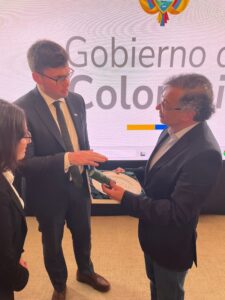
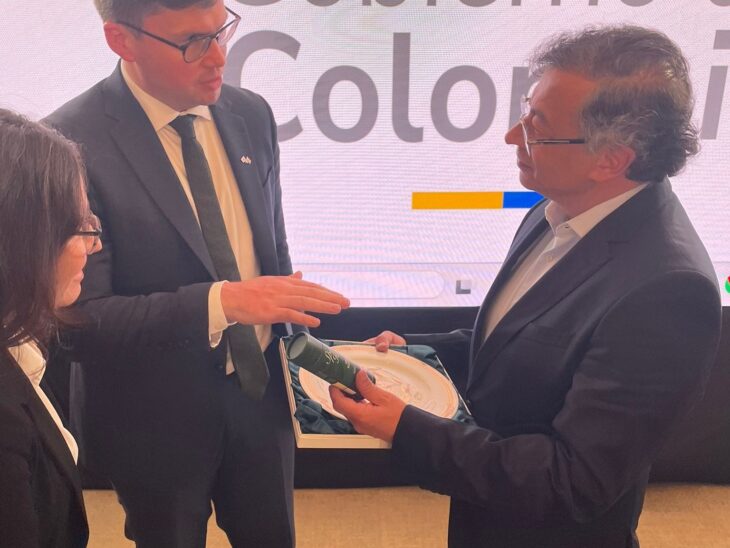
Leader of the delegation, Dan Carden MP, gifting President Petro a BGIPU decorative plate
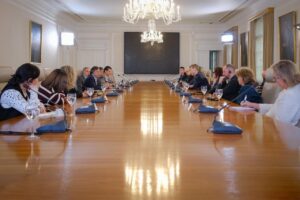
Delegation meeting with President Petro in the Presidential Palace
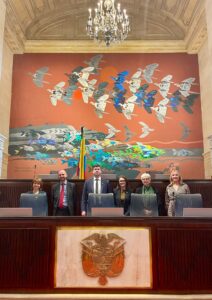
Delegation pictured in the chamber of the Colombian Congress
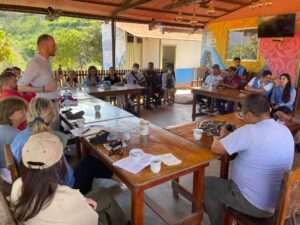
Visit to Valledupar meeting with peace signatories