

IPU highlights action Bhutan is taking to advance gender equality in its Parliament
Women constitute about 52% of Bhutan’s population, yet they remain significantly underrepresented in its Parliament. While Bhutan’s Constitution is grounded in the principle of equity, and progress has been made in women’s participation in local government and public services, their representation in Parliament has declined in recent years.
The IPU report Women in parliament: 1995-2025, highlighted the scale of the problem: in the 2024 elections to the National Assembly, only two women won seats out of 47 MPs, reducing women’s representation in the lower house to 4.3%, down from roughly 15% in the previous legislature. And in the upper house, the National Council, only three women currently serve alongside 22 men, bringing the share of women to 12%.
This reversal followed a period when women’s presence in the National Assembly had grown to seven or eight members, illustrating how gains can be fragile without structural safeguards.
Aware of the democratic shortfall, in late 2024, Bhutan’s Parliament engaged in a dialogue with the IPU’s Gender Partnership Group with a view to changing this picture. Societal norms, the high cost of political campaigns and job insecurity — particularly for women in public service who must resign to contest elections — were identified as key barriers. The IPU pledged ongoing collaboration, including research, advocacy and advice on legal reforms, better party nomination rules, and stronger campaign support systems.
In this vein, in March 2026, the Parliament partnered with the IPU for a capacity-building workshop and multistakeholder consultations aimed at boosting women’s political representation.
Attendees included National Assembly Speaker Lungten Dorji, National Council Chair Sangay Dorji, the National Assembly Deputy Speaker, the opposition leader, MPs and secretariat staff, plus IPU experts.
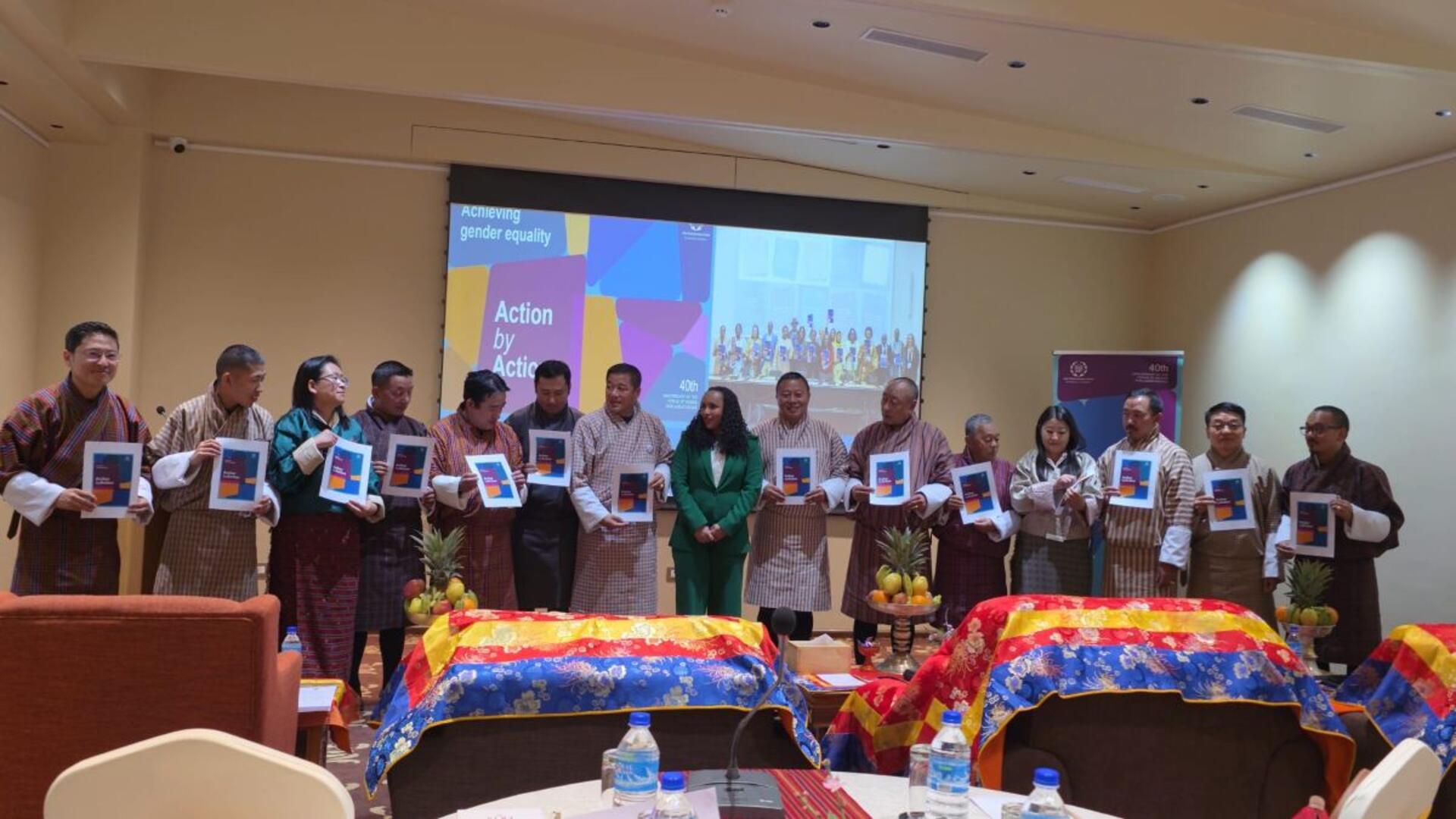
The event also included the launch of the IPU’s Achieving gender equality, action by action campaign in Bhutan, marking the start of a committed, multi-year drive for greater gender equality.
With parliamentary elections expected in 2028 and 2029, Bhutan has time to implement changes – from legal reforms and incentives for parties fielding women candidates to public campaigns challenging cultural barriers.
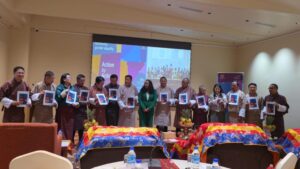
Male and female MPs join the IPU’s campaign ‘Achieving gender equality. Action by action.ʼ © Parliament of Bhutan.