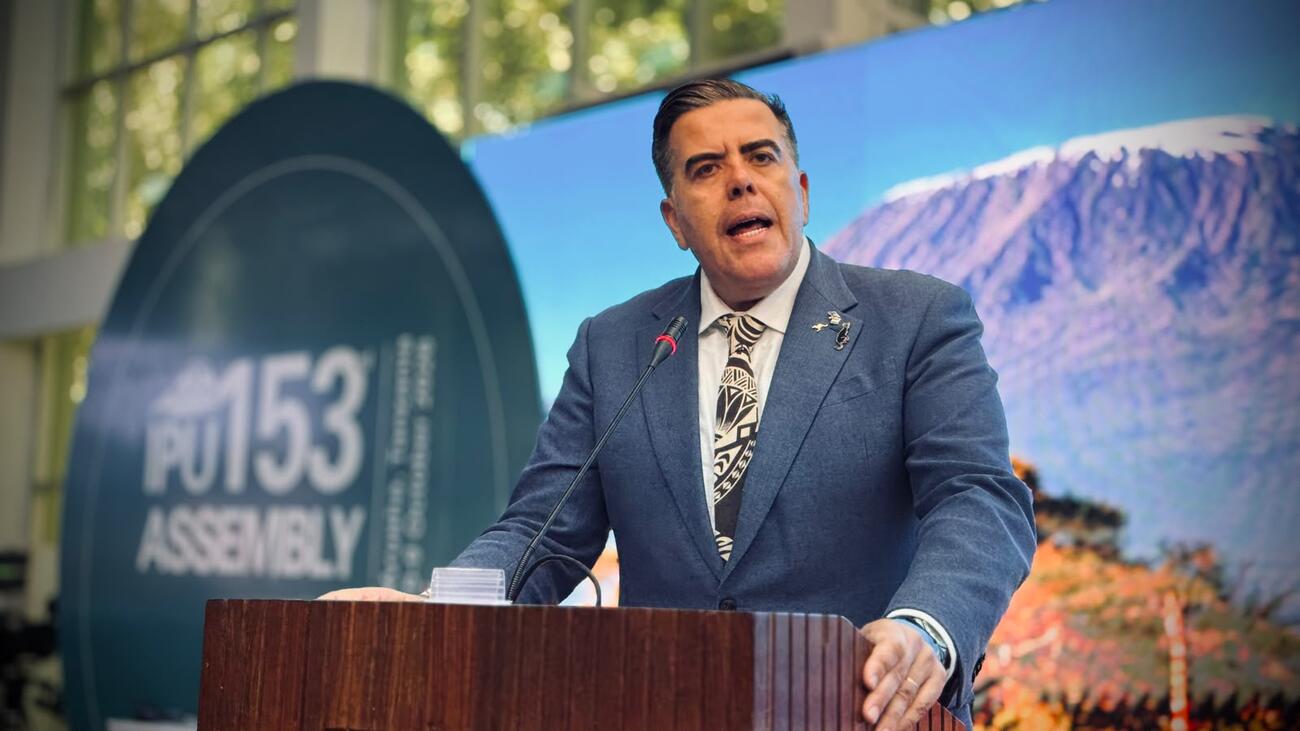


IPU President Milton Dick says climate change is a test for every parliament on earth
Milton Dick, President of the Inter-Parliamentary Union
Climate change is a test for every parliament on earth. It affects our cost of living, our security and our quality of life. In the Pacific, my home region, it is a question of survival.
Yet today climate change has largely slipped off the political agenda. It has become so weaponized and politicized that the very term sparks backlash, in our parliaments and in our societies. When an issue becomes this polarizing, evidence is the first casualty.
And in an increasingly polarized debate, the spread of misinformation becomes an even greater threat, exacerbated by artificial intelligence.
That is why we need reliable facts and information.
And that is why I am proud to introduce a series of new articles by the IPU aimed at bringing the evidence back into parliamentary debate and highlighting some of the tools available to lawmakers.
Every country experiences the impacts of climate change differently. This series offers an opportunity to showcase the efforts of parliaments around the world and share what we can learn from one another.
Over the coming weeks, we will set out what parliamentarians need to know, and what they can do.
We will present the latest science and data, considering themes such as adaptation, finance, the energy transition, oceans and forests, clean air, waste management and methane reduction, drawing from the many resources available within the IPU’s climate campaign Parliaments for the Planet.
Each of these issues ends up on a parliamentarian’s desk. But it is only through working together, across party lines and international borders, that we can really begin to address them.
2024 and 2025 were the warmest years on record and – for the first time – the world overshot 1.5 degrees above pre-industrial levels, the critical temperature goal of the Paris Agreement.[1]
The choices before all our parliaments are hard. How much of already stretched budgets should be directed towards cutting emissions, and how much towards protecting people from the impacts that are already being felt? How fast should we move away from fossil fuels, and how do we protect the workers and regions that depend on them? Should public money keep subsidizing fossil fuels or fund the transition? How do we share land between farming, forests and nature? How can we work together more effectively, learn from each other and stand in solidarity?
Each article in this series will show where parliaments can start to address these questions.
We won’t always agree on the best solutions. Nor should we. That is democracy. But disagreement must be grounded in facts, not misinformation.
From 9 to 20 November 2026, the world meets in Antalya for COP31, the UN climate change conference.
Parliamentarians will be there. Our task is to bring evidence back to the centre, and to act on it.
This is the COP of implementation. We, parliamentarians, have a key role to play. And the IPU creates the space for precisely the kind of open, informed and constructive debate we need.
I hope to see many of you at the IPU’s Parliamentary Meeting on 16 November, co-organized with the Grand National Assembly of Türkiye.
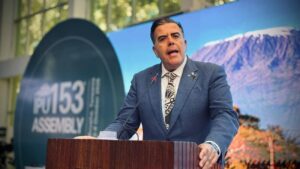
© IPU/ Gary Grenier