


IPU Report concludes that women’s representation in parliament sees sluggish gains
As of 1 January 2026, women hold 27.5% of national parliamentary seats worldwide, up modestly from 27.2% in 2025, according to the Inter-Parliamentary Union (IPU) report Women in parliament 2025. This 0.3 percentage point increase matches 2024’s rate, marking the slowest growth since 2017 for the second consecutive year.
The report is based on IPU data from the 49 countries that held parliamentary renewals for 62 chambers in 2025.
Women’s leadership in parliament drops sharply
The proportion of women Speakers of Parliament has dipped to 19.9% (54 Speakers) compared with 23.7% a year ago.
Of the 75 new Speakers appointed or elected in 2025, only 12 were women (16%).
Regional leaders and biggest increases
The Americas remained the region with the highest representation of women in parliament, with women making up 36.1% of members elected to the 20 chambers in 13 countries that held renewals in 2025.
Overall, women accounted for 35.6% of all parliamentarians in the Americas as of 1 January 2026, across all chambers and countries.
The region is also home to four of the seven countries that have now reached parity, or more women than men, in their lower or single chamber – Bolivia joins Cuba, Nicaragua and Mexico in the Americas– alongside Rwanda, Andorra and the United Arab Emirates elsewhere.
Kyrgyzstan recorded the greatest progress in women’s representation in countries that held parliamentary renewals in 2025, with a 12.9 percentage point increase in women in its Parliament. It was followed by Saint Vincent and the Grenadines (+12.3 percentage points) and the upper chamber in Saint Lucia (+9.1 percentage points).
Quotas remain decisive
Well-designed and implemented quotas continued to play a critical role in boosting women’s representation in parliaments, as demonstrated notably in Kyrgyzstan and Ecuador.
In 2025, chambers with some form of legislated or voluntary quota elected or appointed an average of 30.9% women, compared with 23.3% in chambers without quotas.
Record highs in some countries
Despite the overall slowdown, several countries set new records.
In Australia, 69 women were elected among 150 MPs in 2025, giving women their highest-ever share of seats at 46%.
Czechia also saw a historic result. Sixty seven women were elected to the 200-member lower chamber, up from 50 women in 2021, lifting their share from 25% to one third of MPs.
Women’s representation in Ecuador’s National Assembly reached 45% after the 2025 election, an all-time high.
The year 2025 was a landmark for Japan’s political history: for the first time, the country has a woman Prime Minister and, after elections in July, women’s overall representation in the upper chamber stands at a record 29.4%.
Laggards and biggest drops
By contrast, women’s parliamentary representation remained lowest in the Middle East and North Africa, where women hold just 16.2% of seats on average.
Three countries, Oman, Tuvalu and Yemen, have no women MPs in their lower or single chambers.
Violence against women politicians
In early 2025, the IPU released findings from its study of the prevalence of sexism, harassment and violence against women in parliaments in the Asia-Pacific region. It followed previous similar studies focusing on the African and European regions.
The Asia-Pacific study showed high levels of violence, with 76% of women parliamentarians reporting psychological violence.
And more recently, the 2026 IPU report When the public turns hostile: Political violence against parliamentarians found that women MPs are more affected by intimidation by the public – both online and off – than men, with 76% of women surveyed experiencing violence versus 68% of men.
This growing phenomenon may discourage some women from running for office, an additional obstacle to progress in women’s political representation.
Some countries have taken steps to address the violence: the Philippines Electoral Commission intervened when male candidates made disparaging remarks about their female peers, and the Colombian Parliament passed a law to prevent and punish violence against women in politics.
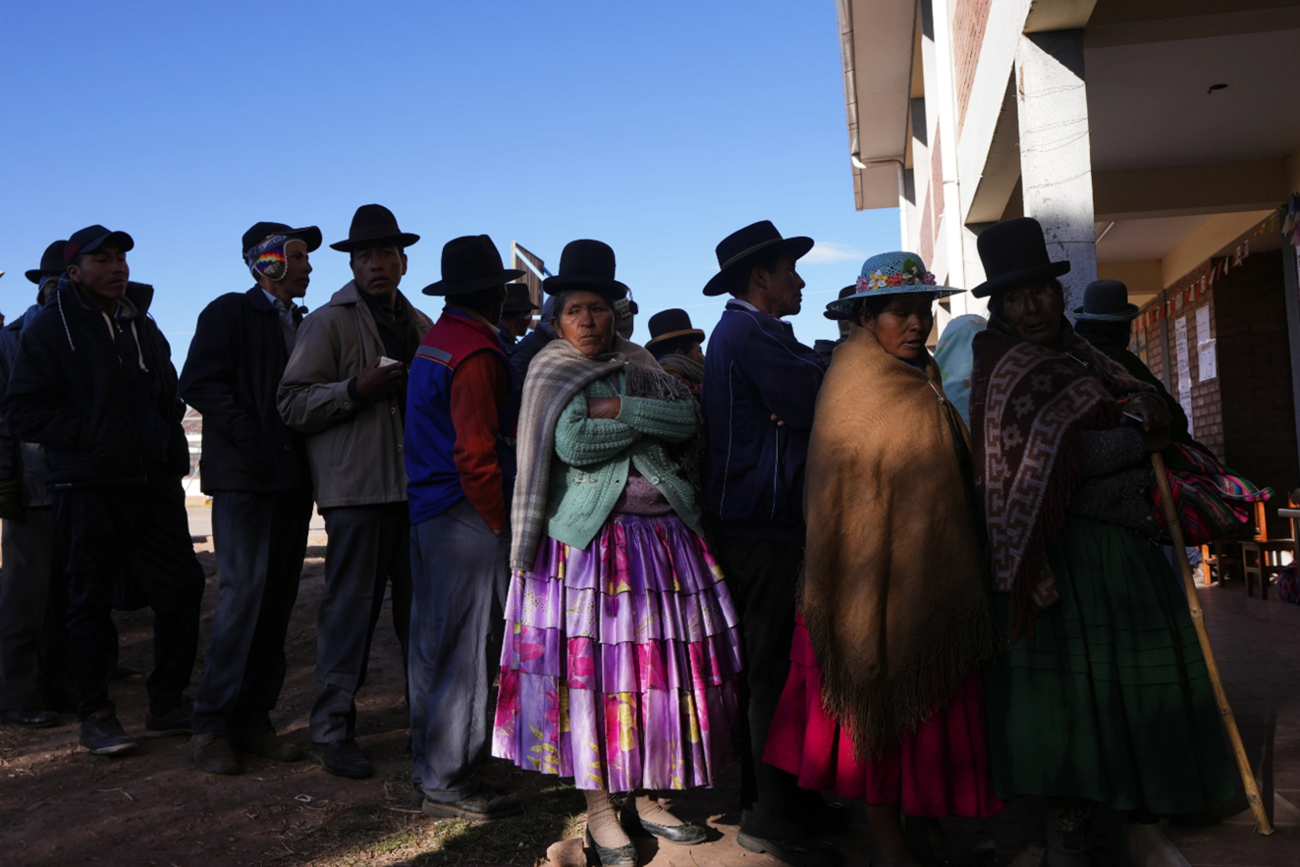
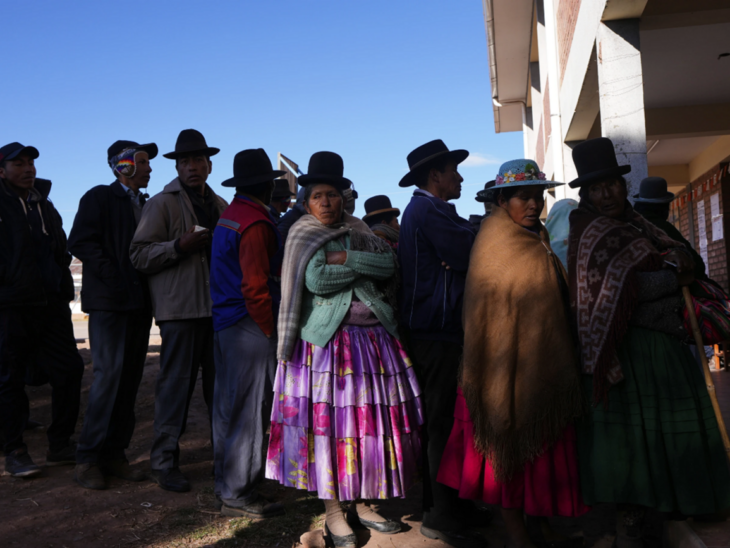
Voters stand in line at a polling station during general elections in Jesus de Machaca, Bolivia, Sunday, Aug. 17, 2025. (AP Photo/Juan Karita)