


Women’s leadership is reshaping global institutions
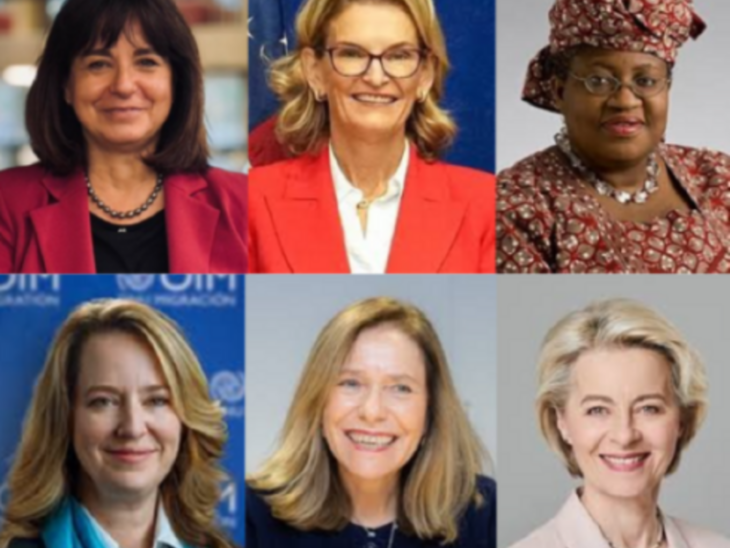
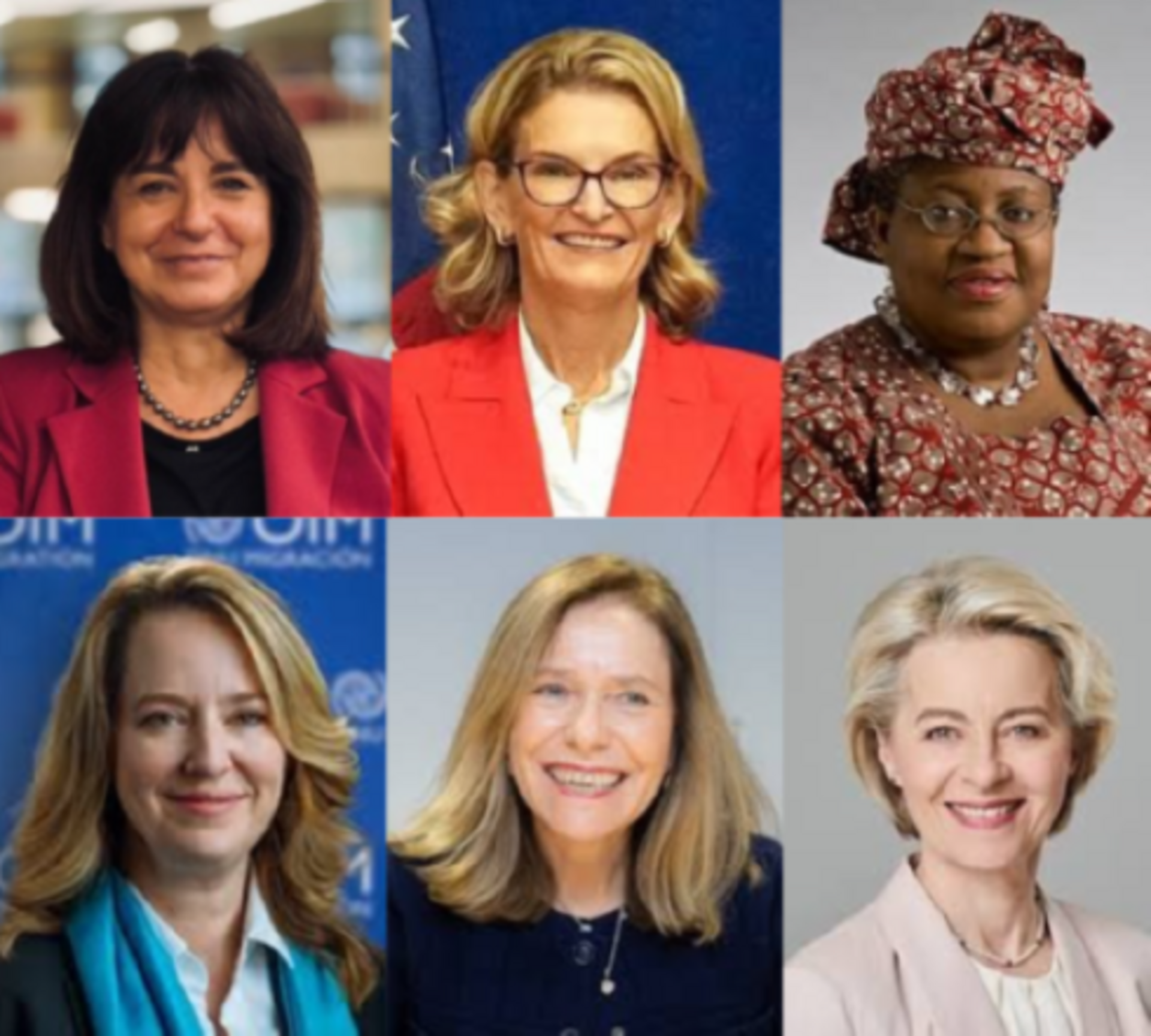
Top row (L-R): IPU Secretary General-elect, Anda Philip, ITU Secretary-General, Doreen Bogdan-Martin and WTO Director-General, Dr. Ngozi Okonjo-Iweala. Bottom row (L-R): IOM Director General, Amy Pope, WMO Secretary-General, Celeste Saulo and President of the European Commission, Ursula von der Leyen. ©IPU
From 1 July 2026, for the first time in its 137-year history, the Secretariat of the Inter-Parliamentary Union will be managed by a woman.
Anda Filip of Romania was elected the tenth Secretary General of the IPU at the 152nd IPU Assembly in Istanbul, becoming the first woman to hold the post since the Organization was founded in 1889. She will succeed Martin Chungong of Cameroon, whose third and final term ends on 30 June 2026.
It is a historic first, as well as a moment that carries a deeper meaning for an organization built around parliaments, democracy and representation.
For decades, the IPU has worked with parliaments to advance women’s equal participation in political life, as well as tracking progress and documenting setbacks. Today, it continues to produce the authoritative data on women in parliament, advocate for reforms and call for political institutions to better represent the people they serve.
Anda Filip’s election marks an important milestone in the IPU’s own institutional journey and reflects a wider shift in the leadership of international organizations.
A wider shift in global leadership
Anda Filip’s election comes at a moment when several other international institutions that shape rules, cooperation and public policy are also being led by women for the first time.
At the World Trade Organization, Dr. Ngozi Okonjo-Iweala became the first woman and first African Director-General in 2021. Reappointed for a second term beginning in 2025, she leads an institution central to global trade rules, economic cooperation and development.
Ursula von der Leyen became the first woman President of the European Commission in 2019 and was elected for a second mandate in 2024. She leads one of the world’s most influential regional institutions, with responsibilities spanning regulation, climate action, security, competitiveness, and the European Union’s role in global affairs.
In the field of technology and connectivity, Doreen Bogdan-Martin became the first woman to head the International Telecommunication Union, taking office as Secretary-General in 2023. Her leadership comes at a time when digital access increasingly shapes whether people can learn, work, receive services and participate fully in public life.
At the International Organization for Migration, Amy Pope became the first woman Director General in the Organization’s 72-year history. Her mandate is to tackle one of the defining questions of our time: how countries manage human mobility with safety, dignity and cooperation amid conflict, inequality, labour needs and climate pressures.
Climate and resilience offer another example. Celeste Saulo became the first woman and first South American Secretary-General of the World Meteorological Organization, with her term beginning in January 2024. A meteorologist and former head of Argentina’s National Meteorological Service, she leads an institution whose work on weather, water and climate services supports early warning systems, disaster preparedness and public safety.
These appointments do not, by themselves, complete the work of parity. But together, they show something important: the highest levels of international decision-making are becoming more representative.
Leadership that reflects diverse voices
When women lead global institutions, they change the perceptions of who is recognized as ready to guide complex decisions that impact millions of lives. Representation at the highest levels also broadens the range of experiences and judgements that institutions bring to global problems. It helps them understand different realities and encourages marginalized groups to step forward.
Research from the GQUAL Campaign shows that, as of 2023, 21 out of 54 prominent international organizations had never been led by a woman. That context makes each first important, but it also makes clear that firsts alone are not the destination
For the IPU, this is not an abstract issue. Its research on gender equality has long concluded that women’s political participation must go beyond entry into institutions. It must include equal power, safe participation, leadership roles and the ability to shape the rules, priorities and culture of public life.
Anda Filip’s election belongs to that larger principle. It is a first. But it should not remain exceptional.
The top job
The next test will be the top job in the multilateral system.
Over the past 80 years, nine men have served successively as Secretary-General of the United Nations. No woman has ever held the role.
At the 151st IPU Assembly in Geneva in October 2025, the IPU Standing Committee on United Nations Affairs adopted a motion recommending the election of a woman as the next UN Secretary-General. The motion called on IPU Member Parliaments to engage their foreign affairs committees and government leadership to help ensure a strong pool of highly qualified women candidates.
Anda Filip’s election shows what progress can look like inside a global institution with a long history. The work ahead is to make sure that these firsts become the norm rather than the exception — in parliaments, in international institutions and wherever decisions are made in the name of people.
Top row (L-R): IPU Secretary General-elect, Anda Philip, ITU Secretary-General, Doreen Bogdan-Martin and WTO Director-General, Dr. Ngozi Okonjo-Iweala. Bottom row (L-R): IOM Director General, Amy Pope, WMO Secretary-General, Celeste Saulo and President of the European Commission, Ursula von der Leyen. ©IPU