


How the IPU helped Chad on the road to democracy
Chad’s first elections in more than a decade marked the end of a three-year transitional period and paved the way for a return to parliamentary democracy. It was fitting that the elections came shortly after Haroun Kabadi – former Speaker of Chad’s National Assembly, Head of the National Transitional Council and now President of the Senate – won the 2024 IPU Cremer-Passy Prize for MP of the year.
The IPU worked throughout 2025 to support the Parliament of Chad, as well as the transitional parliaments in Burkina Faso, Gabon, Guinea and Niger. Highlights included a high-level conference for transitional parliaments in West and Central Africa. The conference took place in Libreville, Gabon, where parliamentary leaders from Chad, Gabon and Guinea exchanged views and lessons learned on speeding up their transition periods with a view to returning to constitutional order.
Chad’s progress was cemented with an agreement signed by the IPU Secretary General and the Speaker of the National Assembly of Chad, Ali Kolotou Tchaïmi. Aiming to help modernize and strengthen the country’s Parliament, the agreement covers both chambers of Chad’s Parliament and followed an IPU workshop on gender equality and youth inclusion for more than 240 Chadian MPs and parliamentary staff earlier in the year.
Chad’s continuing evolution as a parliamentary democracy – and the IPU’s role in supporting it – is even more important given the current wider instability in Central Africa and the Sahel. Speaking just a month before the 150th IPU Assembly, Speaker Tchaïmi warned of “a particularly worrying international context”, which he said was “marked by serious threats to peace and security, the dramatic consequences of climate change and the retreat of multilateralism”.
In November, the IPU organized a seminar on both Sustainable Development Goals (SDG) self-assessment and human rights, for newly elected members and staff of Chad’s Parliament, bringing together around 50 participants from both chambers. It was the first chance that parliamentarians had had to assess progress since the Parliament’s first SDG self-assessment, held before the 2021 military coup. Despite the challenges of the previous three years, participants reported good progress, particularly around data collection and parliamentary action. The commitment by Chad’s new Parliament to advance the SDGs during a challenging political transition gives a valuable insight into the IPU’s work to promote democracy and strengthen parliaments across West and Central Africa.
On the human rights’ front, the seminar helped the newly elected parliamentarians to familiarize themselves with the work of the UN Human Rights Council and its Universal Periodic Review (UPR). Participants worked on a plan that would strengthen the contribution of the Chadian Parliament
to this mechanism as part of their efforts to promote human rights in the country.
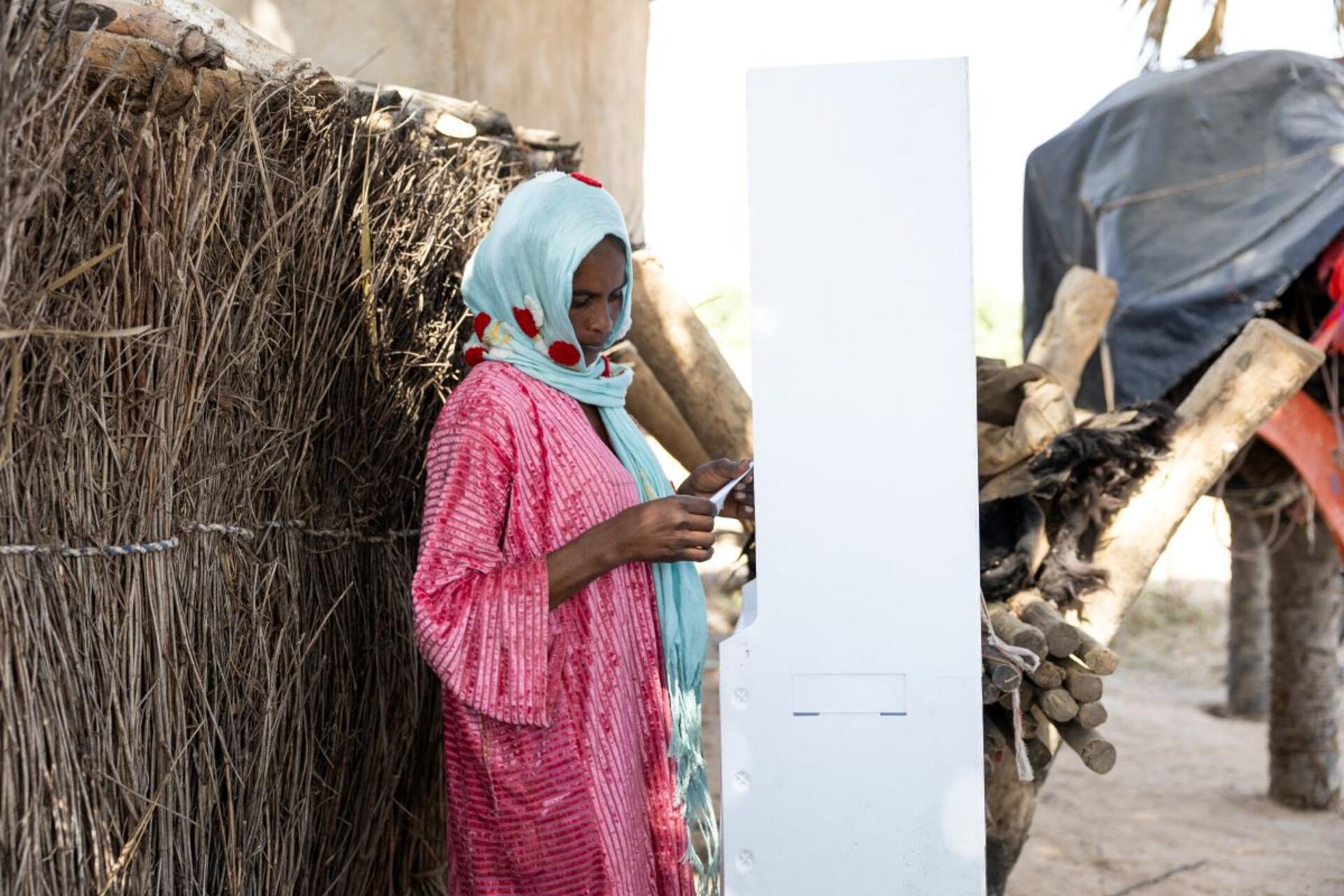
A voting booth in Chad © Joris Bolomey/AFP