


How the IPU helps Ghana to reduce methane emissions
When the Parliament of Ghana decided to take action to reduce climate-damaging greenhouse gas emissions, the IPU was on hand to offer support, technical expertise and capacity-building. We worked closely with parliamentarians to strengthen their understanding of Ghana’s commitments under the 2015 Paris Agreement, and to identify opportunities for parliamentary action – including on methane emissions – that can help support their achievement.
Methane is 80 times more potent than CO2 and is responsible for around 30% of the global warming we are experiencing today. Because methane is a short-lived pollutant – it only remains in the atmosphere for 12 years instead of centuries like CO2 – methane reduction is like pulling the “emergency
brake” on global warming, offering countries a fast way to slow warming while pursuing longer-term emissions reductions.
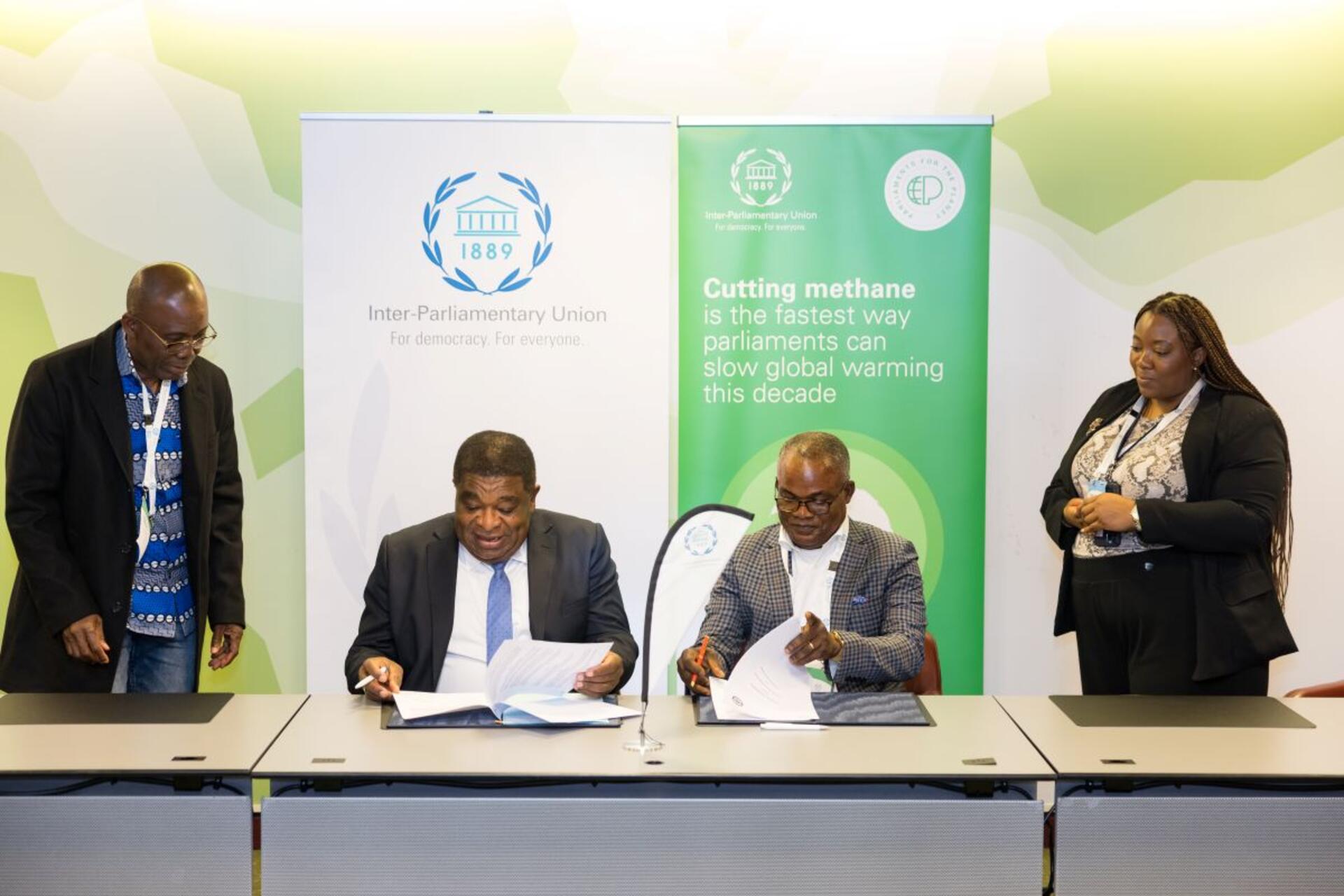
At the 151st IPU Assembly in Geneva, the Clerk of the Parliament of Ghana and the IPU Secretary General signed a cooperation framework to strengthen Ghanaian parliamentary capacity to help reduce methane emissions, with philanthropic support from the Global Methane Hub project, a global network of experts and policymakers pushing to mitigate methane emissions.
The Speaker of Parliament, Alban Kingsford Sumana Bagbin, formally launched the partnership in Accra on 31 October to coincide with the first session of the workshop Enhancing Parliamentary Action on Climate Change: Strengthening the Role of Parliament in Reducing Methane Emissions.
“Intensifying efforts to reduce methane emissions is important,” he told participants. “It is a potent greenhouse gas. Tackling methane emissions therefore offers one of the fastest and most effective pathways to slow the pace of global warming.”
Speaker Bagbin also thanked the IPU for its support and urged the Budget Committee of Parliament to prioritize investment in climate initiatives, particularly those which reduce methane emissions and promote green innovation. “Climate change is not a distant threat, but a global crisis that demands bold legislative leadership,” he said. “By investing in methane reduction and green technologies, Parliament can help shape a sustainable environment for Ghana.”
Until recently, methane had received limited attention in parliamentary discussions. The IPU capacity-buidling programme is helping bring the issue onto Parliament’s agenda while strengthening members’ understanding of how methane action fits within Ghana’s broader climate commitments,
institutions and policy priorities.
After the initial workshop had finished, Parliament drafted a statement on methane, pushing methane onto the political agenda. MPs also met with executive institutions such as the Environmental Protection Agency to discuss current methane plans and the role of effective parliamentary oversight, legislation and budget scrutiny.
As part of the programme, MPs visited a rice-growing area to see the impacts of climate change for themselves. They were also shown practical solutions such as alternate wetting and drying, which can cut methane emissions by up to 70% without reducing yields. MPs also took the opportunity to
connect with constituents during the field visit, discussing local concerns and potential solutions.
In the wake of the IPU programme, reducing methane emissions is now part of the Budget Committee’s official work plan for 2026, ensuring sustained parliamentary attention on the issue. The Committee also recently undertook two weeks of oversight visits to mining companies to discuss and raise awareness about the mining industry’s contribution to methane emissions, as well as possible monitoring and mitigation measures.
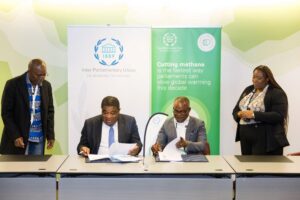
In October 2025, the IPU signed a cooperation framework to strengthen Ghana’s parliamentary capacity to help reduce methane emissions. © IPU/Pierre Albouy